

Designing and operating an inclusive e-commerce experience from idea to launch
Building AndroRoom: A Product, a Brand, and a Point of View
My Role: Founder · Product & Experience Lead
Context: Zero-to-one DTC brand · inclusive fashion · solo operator
Focus: Empathy, experimentation, end-to-end ownership
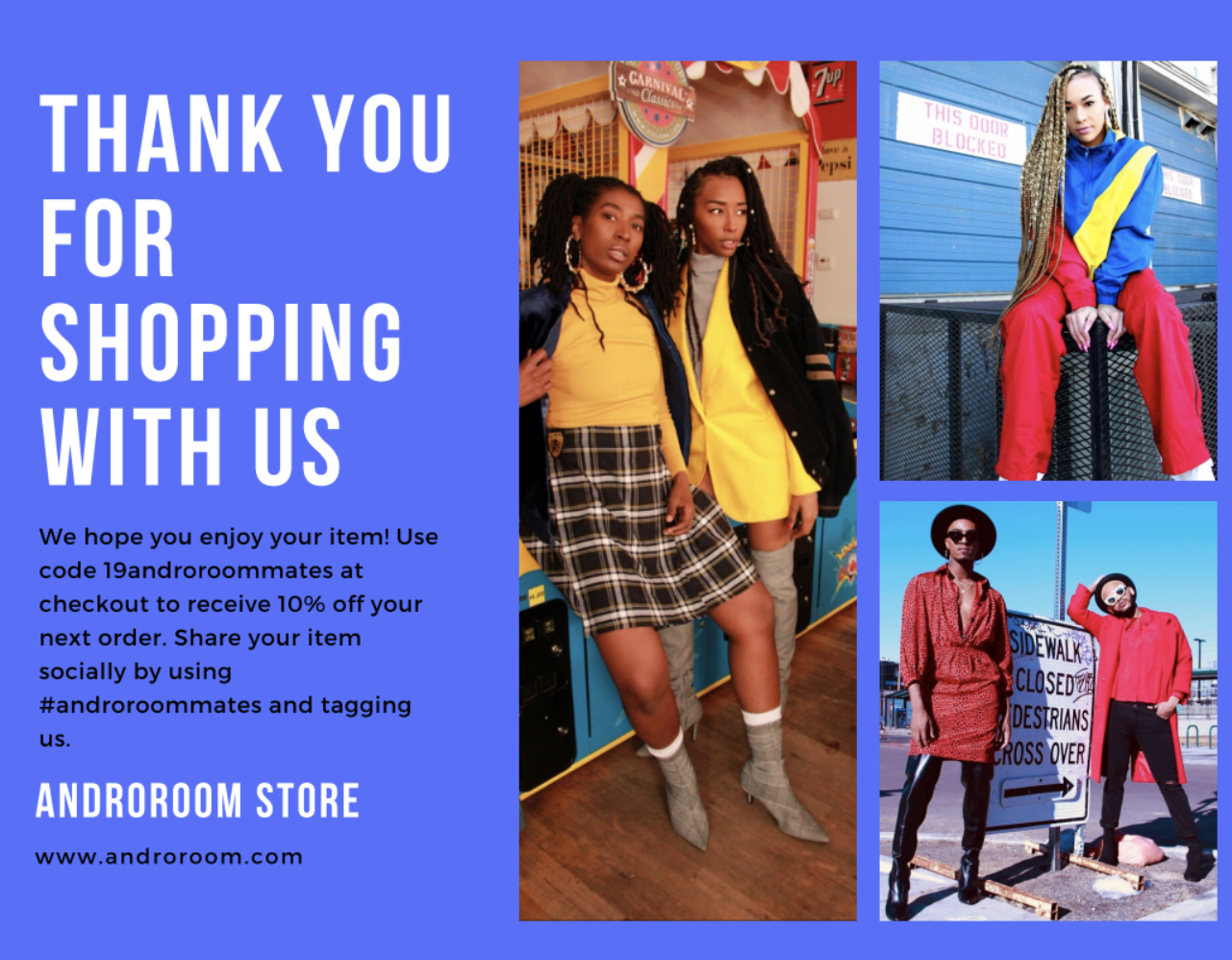


AndroRoom began as a question, not a product.
What would it look like to create an e-commerce experience that genuinely reflected and respected people who rarely see themselves centered in retail, especially around gender expression, identity, and fit?
At the time, inclusive fashion options were limited, and the shopping experience often felt alienating or overly rigid. I wanted to build something different: a brand that felt thoughtful, affirming, and human, not just in its messaging, but in how the experience worked.
The Starting Point
As the founder, I was responsible for everything; strategy, design direction, UX decisions, operations, and iteration.
I approached AndroRoom as both a creative project and a product:
Designing the experience from the ground up
Making tradeoffs between vision, feasibility, and speed
Listening closely to customers and adjusting in real time
It was an exercise in end-to-end thinking, where every decision mattered.
My Role in the Work
Designed the experience with empathy first
I started by deeply considering the emotional context of the user, what it feels like to shop when fit, identity, and representation are personal. That lens informed everything from navigation to product language.
What I Did
Built and launched a DTC platform
I designed and operated the e-commerce experience end to end, making decisions about structure, content, checkout flow, and customer communication.
Tested, learned, and iterated quickly
Rather than over-engineering upfront, I experimented continuously; observing behavior, gathering feedback, and refining the experience based on what actually worked.
Balanced creative vision with operational reality
As a solo operator, I made intentional tradeoffs to keep the business moving; focusing on clarity, simplicity, and momentum without losing the heart of the brand.
Conversion improved by ~15% through UX experimentation and iteration.
Customers responded positively to the clarity, tone, and care embedded in the experience.
The brand resonated because it felt considerate, not generic.
More importantly, AndroRoom proved that inclusive design isn’t just about values, it’s about execution. When care is baked into the experience, people feel it.
What Changed
Why This Work Matters
AndroRoom shaped how I think about design, production, and leadership.
Building something from scratch, with limited resources and no safety net, sharpened my instincts around prioritization, empathy, and decision-making. It taught me how to move quickly without losing intention, and how to design experiences that respect people as they are.
That perspective continues to inform how I support design teams today: with care, clarity, and a deep respect for the humans on the other side of the work.